|
Online Onboarding >> Employee Offboarding Program
Published 26/10/2024 Best Employee Offboarding Program Guide and Tips
What is the Definition of Employee Offboarding?Employee offboarding is the formal process of managing an employee's exit from an organization, whether the departure is voluntary by resignation or retirement, or, involuntary by termination or layoff. It encompasses all the administrative, legal, security, and knowledge transfer steps required to ensure a smooth transition for both the departing employee and the company. It is oftendescrie opposite of onboarding, as it systematically reverses the process to fully disengage the individual from the organization while preserving critical business functions and relationships. Why is it Important to Offboard Employees Properly?It is often described as the opposite of onboarding, as it systematically reverses the process to fully disengage the individual from the organization while preserving critical business functions and relationships. So, why is it important to offboard employees thoughtfully? Let's delve into the reasons.Employees are a Wealth of Knowledge Consider the wealth of knowledge departing employees hold. They possess insights into your operations and culture that can be invaluable if captured effectively. A structured offboarding process facilitates this transfer of knowledge. It encourages outgoing team members to share their experiences, document critical processes, and offer feedback on what worked well and what didn't during their tenure. This information can then be leveraged to refine existing practices or even enhance future staff onboarding initiatives. Maintain Respect and Reputation How you handle an employee's departure speaks volumes about your company culture. The emotional aspect for an employee leaving a workplace shouldn't be underestimated.A respectful and thorough offboarding process signals to remaining employees that they are valued beyond their immediate contributions. An effective offboarding program helps turn departing employees into advocates for your company, preventing the negative consequences associated with them becoming antagonists. This process is vital as advocates will positively influence recruitment and your company's reputation, while antagonists can actively damage your brand and discourage potential talent. By ensuring a smooth transition out of the organization, you're not just preserving goodwill; you're cultivating an environment where people want to stay longer because they see how others are treated when they leave. Minimize Security Risks There’s also a practical side to consider, security and compliance risks associated with departing employees. Without proper offboarding protocols in place, businesses risk leaving sensitive data accessible or failing to retrieve company property like laptops or access cards. Implementing security measures as part of your offboarding process helps protect your organization's assets while maintaining integrity in handling personal information responsibly. 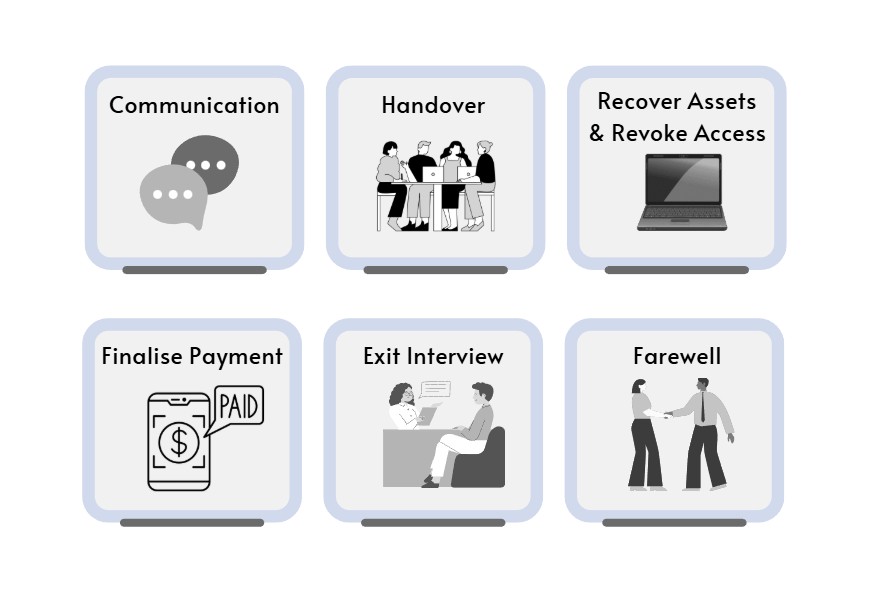
Steps Involved in the Employee Offboarding Process
Navigating the end of an employee's journey at a company can be just as crucial as the beginning. An effective offboarding process not only ensures a smooth transition but also leaves a lasting positive impression on departing employees. Crafting the best employee offboarding program requires thoughtful planning and execution, much like its onboarding counterpart. It's about more than just collecting company property or revoking access—it's an opportunity to reinforce your employer brand, gather valuable feedback, and even create future advocates for your organization.
A Checklist for Best Practice Offboarding:1. HR/Manager Receives & Acknowledge Resignation: Makes the departure official and starts the process.2. HR Notifies Key Teams: Alerts Payroll, IT, and the Manager to start their tasks. 3. HR Updates HR System Records: Ensures accurate records for compliance and reporting. 4. HR Schedules Exit Interview: Gathers valuable, confidential feedback to improve the company. 5. Manager Creates Knowledge Handover Plan: Ensures all key projects and tasks are documented and transferred. 6. Manager Transfers File Ownership: Moves company files from the employee's drive to team storage. 7. Payroll/Finance Prepares Final Paycheck: Calculates final wages, unused PTO, and severance (if applicable). 8. IT/Manager Recovers Company Assets: Collects all company property (laptop, phone, keys, ID card). 9. IT Revokes All Access: Immediately disables all network, email, software, and building access. 10. Manager Informs Remaining Team: Communicates the transition plan to reassure the team. 11. Manager Gives a Formal Thank You: Organizes a farewell/card to end the relationship on a positive note. 12. HR Updates Company Directories: Removes the employee from all internal phone lists and org charts. 13. HR Completes Final Employment Paperwork: Ensures the employee signs forms related to confidentiality, final pay, and legal agreements. 14. IT Ensures Final Email Handling: Sets up an automatic out-of-office reply and a forwarding rule to the new contact. 15. Manager/HR Updates Organizational Charts: Finalizes the company structure to reflect the vacancy or new coverage. 16. IT Changes Shared System Passwords: Updates passwords for any critical third-party accounts (e.g., social media, vendor portals) the employee had access to. Last impressions matter mostEffective offboarding is far more than an administrative task. It is a strategic investment that safeguards your organization’s reputation, reinforces your internal culture, and secures your future talent pipeline. Just as onboarding sets the tone for success, managing departures with grace and intention shapes the lasting memory employees carry and the positive external perception of your brand. By prioritizing respect, crystal-clear communication, meticulous knowledge transfer, and empathetic benefits clarity, you not only mitigate risk but foster enduring trust. A refined offboarding process doesn't merely manage exits—it curates a powerful legacy and maintains valuable connections with those who helped build your business.Start your new employee onboarding here >> Ready to start creating your online offboarding portal?
|

 Employee offboarding is an important step of the employee lifecycle. Offboarding employees doesn't simply entail saying goodbye, but you should also ensure that their departure causes minimal disruption to your daily business operations. An effective offboarding process not only ensures a smooth transition but also leaves a lasting positive impression on departing employees. Crafting the best employee offboarding program requires thoughtful planning and execution, much like its onboarding counterpart. It's about more than just collecting company property or revoking access—it's an opportunity to reinforce your employer brand, gather valuable feedback, and even create future advocates for your organization.
If done properly, the employment offboarding process is beneficial to both the organization and the exiting employee.
Employee offboarding is an important step of the employee lifecycle. Offboarding employees doesn't simply entail saying goodbye, but you should also ensure that their departure causes minimal disruption to your daily business operations. An effective offboarding process not only ensures a smooth transition but also leaves a lasting positive impression on departing employees. Crafting the best employee offboarding program requires thoughtful planning and execution, much like its onboarding counterpart. It's about more than just collecting company property or revoking access—it's an opportunity to reinforce your employer brand, gather valuable feedback, and even create future advocates for your organization.
If done properly, the employment offboarding process is beneficial to both the organization and the exiting employee.
 8. Wish them Farewell